


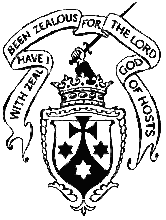
“I was prepared with great care to receive the visit of the Holy Spirit, and I did not understand why greater attention was not paid to the reception of this sacrament of Love… Like the Apostles I awaited the Holy Spirit’s visit with great happiness in my soul… Finally the happy moment arrived, and I did not experience an impetuous wind at the moment of the Holy Spirit’s descent but rather this light breeze which the prophet Elias heard on Mount Horeb. On that day, I received the strength to suffer, for soon afterward the martyrdom of my soul was about to commence.”
-- Story of a Soul by St Thérèse of Lisieux
Showing posts with label St Therese of Lisieux. Show all posts
Showing posts with label St Therese of Lisieux. Show all posts
Wednesday, May 23, 2012


Monday, June 27, 2011
"St. Thomas Aquinas wrote that 'the first thing that is necessary for every Christian is faith, without which no one is truly called a faithful Christian. Faith brings about four good effects. The first is that through faith the soul is united to God, and by it there is between the soul and God a union akin to marriage. 'I will espouse thee in faith.''
In other words, that Therese Martin should become St. Therese, a bride of Christ, should only appear logical to us in light of St. Thomas' doctrine. If espousal with God is the fruit of the act of faith, then this must also be a universal vocation and not something exclusive to consecrated souls. God's courtship of the soul begins in baptism. Certainly, the nature of love is that it must be freely offered and the response must also be given in freedom, but often God's proposal is left unrequited - hence, the scandal of sin. But when his offer is accepted whole-heartedly and with the radical response demanded of an authentic act of faith, then the soul enters into a marital covenant with God and takes upon itself all the dignity and privileges accorded to this state.
This faithful matrimonial love implies total participation in the life of one's spouse, experiencing in one's own soul the spouse's interior and exterior trials. Naturally, St. Therese of Lisieux, faithful spouse to Christ, could do no less than offer herself together with her divine Spouse as an expiatory victim for the salvation of sinners.
Her formal relationship with Christ and her new insertion into his life began fittingly on Christmas. Also fittingly, her relationship with him on earth would end on Calvary.
Between Bethlehem and Calvary, St. Therese of Lisieux would share in her Spouse's joys, sorrows, trials and always his peace. Further, like her Spouse, she could not remain indifferent to his rejection by so many souls. Her relationship with these souls began under the auspices of maternal love and intercession. It would transform with time into fraternal love and solidarity - and the vicarious suffering to which both loves expose themselves."
-- St. Therese of Lisieux: Spouse and Victim by Cliff Ermatinger
Wednesday, March 16, 2011
Ask St Therese to accompany you
"St Therese wrote that the four Gospels were her greatest treasure. There she came to know Jesus Christ more profoundly and to love Him more deeply. She wrote, 'I wanted to love, to love Jesus with a passion, giving Him a thousand proofs of my love while it was possible. I copied out several passages on perfect love, on the reception God will give His Elect at the moment He becomes their Reward, great and eternal and I repeated over and over the words of love burning in my heart' (Story of a Soul, 102-3).
The beautiful relationship that she had with Jesus can in some measure be ours. St Therese invites us to join her in reflecting God's Word in Lent, to allow God's Word to touch us in transforming ways. As we meet God's Word each day and join that Word to St Therese's reflection, we will be drawn into prayer. [...] Our heart may wish to praise the Lord or simply be thankful for all that we have received. We may find ourselves resting with a word or a phrase over a period of time because the word engages our heart.
Our prayerful mindfulness of a word or a phrase is truly a form of lectio divina, an ancient form of prayer in which God's Word is central. The experience of God's Word in lectio is live giving, providing a way of bonding with God's love.
St Therese invites us to sit or to kneel and to put ourselves in the presence of God. God is always with us but we need to become mindful of His loving presence within us. From that act of faith, we can begin our Lenten meditation. Ask St Therese to accompany you and to help you to draw closer to the living God Who is Christ Jesus, the Lord."
-- A Lenten Journey with Jesus Christ and St Therese of Lisieux by Fr John F Russell, OCarm
Tuesday, March 8, 2011
Feast of the Holy Face

O Jesus, Who in Thy bitter Passion didst become "the most abject of men, a man of sorrows," I venerate Thy Sacred Face whereon there once did shine the beauty and sweetness of the Godhead ... but now it has become for me as if it were the Face of a leper! Nevertheless, under those disfigured features, I recognize Thy Infinite Love and I am consumed with the desire to love Thee and make Thee loved by all men.
The tears which well up abundantly in Thy Sacred Eyes appear to me as so many precious pearls that I love to gather up, in order to purchase the souls of poor sinners by means of their infinite value. O Jesus, Whose adorable Face ravished my heart, I implore Thee to fix deep within me Thy Divine Image and to set me on fire with Thy Love, that I may be found worthy to come to the contemplation of Thy glorious Face in Heaven. Amen.
-- St Thérèse of Lisieux
Tuesday, February 8, 2011
The Atom of Jesus-Host
I am just a speck of dust,
But I want to make my dwelling
In the shadow of the sanctuary
With the Prisoner of Love.
Ah! my soul longs for the host,
I love him and want nothing more.
It is the hidden God who attracts me.
I am the atom of Jesus....
I want to stay not knowing,
In forgetfulness of all created things,
And by my silence console
The Host of the sacred ciborium.
Oh! I would like to save souls,
And make elect from sinners.
Give the flames of an apostle
To your atom, sweet Jesus!....
If I am despised by the world,
If it considers me as nothing,
A divine peace floods me.
For I have the host as my support.
When I draw near the ciborium,
All my sighs are heard...
To be nothing is my glory.
I am the atom of Jesus....
Sometimes when Heaven is overcast
And this atom cannot take flight,
It loves to hide in the shadow
And attach itself to the golden door.
The the Divine light,
Which makes all the elect rejoice,
Comes to earth to warm up
This poor atom of Jesus...
Under the warm rays of grace,
The atom sparkles.
When the light breeze passes by,
It gently sways...
Oh! what ineffable delight!
What favors has it not received?...
Right next tot he host slips
The poor atom of Jesus....
Pining away near the host
In the tabernacle of love,
Thus my life will be spent
While waiting for the last day.
When our trials will be over,
Flying to the dwelling of the elect,
The atom of the Eucharist
Will shine near her Jesus!...
-- St Therese of Lisieux
Wednesday, December 1, 2010
A new spirituality
"The teaching of St. Thérèse of the Child Jesus was based on this central experience. The greatest grace of her life was her understanding of Mercy. The theology she elaborated flowed from a personal insight, something which came naturally to her. At times she experienced suffering so intense that she said, "When I am in heaven, if I have been mistaken about this, I will come and let you know. But in the depths of her being she was certain. Her entire teaching flowed from this light in the next talk I shall try to enlarge on this, but now I should like to show how this doctrine has changed our spirituality, so to say. She was not the only one, there had been other messages of Love through the ages, but I believe that Thérèse's is still the most important one from a theological and spiritual point of view.
In the years following her death Pius X recommended frequent Communion, which points us toward positive holiness. The holiness and asceticism of the 19th century were negative: people sought above all to purify themselves and make reparation to God. The characteristic note of spirituality in our times is the positive aspect of love which has become a part of our way of life. This is why it succeeds. in each era we follow the grace and light God gives us. Formerly the stress was more on sacrifice; today it is on presence and contact. There was a grandeur about former times, but people did not have the same understanding of Love and Mercy. Their spirituality did not appeal to the majority, since few were strong enough to live by it. Now, on the other hand, as the concept of divine Mercy has been brought to the fore, it has been a powerful influence in opening up the mystical life to the many.

Two periods can be distinguished here. I believe St. Thérèse of the Child Jesus is the herald of the new one. She has exemplified and modernized, in a certain sense, the spirituality of St. Paul, who said, "Through the grace of God I am what I am, and the grace he gave me has not been without result"

Thérèse's greatness lay in her discovery of Mercy. On one occasion she said to her infirmarian, "You know well that you are taking care of a little saint." They cut her finger nails. 'Keep them,' she said, "some day someone will treasure them." She also remarked: 'They say I have virtue but that isn't true; they are mistaken. I do not have virtue. God gives me what I need at each instant. I have only what I need for the present moment. These paradoxes are extraordinary and disconcerting. There is a certain quality of greatness in St. Thérèse. I assure you that I have studied her in depth for forty years and her greatness has often overwhelmed me. She has renewed our understanding of the gifts of the Holy Spirit, as we see them operating in her contemplation. It harmonizes with the teaching of St. Thomas. It is not a matter of sentimentality or of novelties. It is a rediscovery, an illustration of the traditional doctrine. I believe this is one of the great graces granted to our times.

In her surroundings, Thérèse was unique. I have known Mother Agnes since 1927. I loved and revered her deeply. She was a very holy soul, and the same was true of Sister Genevieve. But St. Thérèse of the Child Jesus was a giant in comparison and far surpassed them. She is the only one, we could say, to have read and perfectly understood St. John of the Cross. In spite of her superior intelligence and spiritual knowledge, however, she showed perfect submission - a sure proof that her understanding was indeed supernatural.

To be practical, we should exploit this theological knowledge of God, of Mercy. St. Thérèse of the Child Jesus has left her mark on our times. She has, so to say, popularized contemplation and sanctity itself."
God is Love by Fr Marie-Eugene of the Child Jesus, ocd
Saturday, November 27, 2010
Surrender to Love
"Seeing that God was not loved, she, Thérèse, would 'make reparation' too. The Love of God, Merciful Love, was not known. So seldom did people have recourse to Mercy; everyone appealed to Justice. They kept accounts with God, while he wished to give himself according to his own exigencies. Thérèse said to herself. "God has so much Love to give, and he can't do it; people present only their own merits, and these are so paltry." She therefore presented herself before God, saying: "Give me this love; I accept to be a victim of Love that is, to receive all the Love which others do not receive because they will not let you Love them as you wish. Such was her confidence in the Mercy which exceeds justice."
-- God is Love by Fr. Marie-Eugene of the Child Jesus, ocd
She then dreamt of making her offering to Merciful Love. But it was not directly in order to receive Love, it was 'to please God"-, it was so that God might have the opportunity to give himself as intensely as he desired. She would be a victim of Love, she accepted to be consumed by Love, if only God could have his way. Her object was to please him, no to be a saint; it was not even directly to give him to others, but only to please him. Her offering was God-centered. Thérèse looked only at God and she lived by this Love. She wanted to delight God, to give him joy, to let him Love.

In the Gospels she also pondered the scene with the children. To enter God's kingdom, one must be a child. True, one must also be a saint. But who is greater? The smaller, because it is the weaker. Not by reason of any merits, but because the child, in its weakness and poverty, offers God the widest vessel, capable of holding all. Here we have the essence of St. Thérèse of the Child Jesus' mystical theology.

She also found in St. John of the Cross the most distant horizons of Love, In the Living Flame and the Spiritual Canticle he describes in a rich and comprehensive way the working of God's Love in the soul. These descriptions correspond clearly to Thérèse's experience"
-- God is Love by Fr. Marie-Eugene of the Child Jesus, ocd
Friday, November 26, 2010
God is Love: certitude in times of darkness
"A little later her sister, Mother Agnes, now Prioress, gave her to Mother Marie de Gonzague as an assistant in the formation of the novices, 28 among whom in 1894 was her sister Celine. Assigned to the novitiate, Thérèse found an opportunity to explain her teaching, which otherwise she would never have formulated. Obliged to speak to her sisters, she told them what she felt and experienced. When they questioned her, she quoted by heart passages from St. John of the Cross - as she often did at recreation - for that was her life.

Thérèse thus explained a little of her doctrine, but always in the midst of distress, because of the opposition of her surroundings and the sermons she had to listen to. Her teaching was quite different from all this. In her obscure contemplation she had made the discovery of the God who is Love, an obscure discovery but one which she grasped almost by second nature and which created certitude in the depths of her soul. God is Love. She could say: "I contemplate and adore the other divine perfections ... through Mercy. All of these perfections appear to be resplendent with Love." There was nothing but this in God.

The searching went on in darkness. Thérèse only explained what she had to explain, either for the novices or when asked to write the story of her life later. Habitually she lived in the dark. We might say that she found herself bogged down in what is often called the purification of the spirit. This consists far less in keen sufferings marked by distinct stages - some of these there were indeed - than in a muddled fog or kind of quicksand in which one becomes enmired and unable to move." This trial continued in anguish, but with upward thrusts toward God and convictions that she had found him. There was an apparent contradiction between her progressive discovery of sin and of sinful tendencies in herself and others, and her discovery of God.

The God whom Thérèse discovered was the God of Love. At the same time she saw that around her, and even in her Carmel, God was not known. The God who is Love was not known! They knew the God of justice, quid pro quo, and they tried to acquire merits. But, thought Thérèse, this was not the way to win him. God is Love, God is Mercy. But what is Mercy? It is the Love of God which gives itself beyond all demands and rights.

The Council of Trent declared that God bestows his gifts in two ways: out of justice, that is, as a reward for merits, and out of Mercy, that is, surpassing all merit. Thus he is true to his own nature, for he is Love, Goodness which pours itself out. He has a need to give. Therein ties his joy.

Thérèse read the Gospels. What did she find there? Mary Magdalen: God had forgiven her much, and therefore she loved much." Thérèse also contemplated the prodigal son and the fathers joy in receiving him back: joy, for this was his opportunity to give himself. There will be more rejoicing in heaven over one sinner repenting than over ninety-nine upright people who have no need of repentance. What glorifies God and "delights him' is to be able to give himself, and give himself freely. This was Thérèse's discovery: what gives God joy is the power to give more than what is required by strict justice, freely, based on our needs and the exegencies of his nature which is Love, and not on our merits.

Thérèse felt acutely the tension of her surroundings, the opposition between her light, her needs, and what she saw being practiced around her . People kept score with God. When you stood before the eternal Father who was to judge you, he would look at your list of merits. You would have obtained so many indulgences, you would have so many merits, and your place would be assigned. For her part Thérèse said: I shall take care not to present any merits of mine, but only those of our Lord. As for me, I shall have nothing, I do not want to present anything, I prefer to let God love me as much as he wants." Then she added, "It is because of this that I shall get such a good reception." Here we have the heart of her teaching."
-- God is Love by Fr. Marie-Eugene of the Child Jesus, ocd
Friday, October 1, 2010
Feast of St Thérèse of Lisieux

Thérèse Martin was born on January 2nd, 1873 at Alençon, France. She grew up in a loving and deeply religious family. All the children entered religious life, and the devout parents were recently beatified. When Thérèse was four and a half years old, her mother died. She changed from a sunny, lively child, into a timid and sensitive girl. Then when her favourite sister, Pauline, entered Carmel, she became even worse, and it took Our Lady’s smile to cure her of her resulting illness. Although she continued to grow in her love of God, Thérèse’s extreme sensitivity continued to hamper her until a special grace on Christmas Eve in 1886 changed her for good. At this point, she wanted to pursue her dream of entering the Lisieux Carmel, a dream she had cherished from the age of nine.
Wanting to enter at the early age of fifteen, she encountered much opposition, and in her determination, she even begged the Pope, Leo XIII, to grant her permission. Shortly after this, she did enter the Lisieux Carmel, on April 9, 1888. Here she found what she was looking for: a life of prayer and penance, accompanied by a tremendous peace. However, despite her desire was to become a saint, Thérèse discovered her weakness and inability to do so. Yet she believed that God wouldn’t inspire desires that He didn’t want to grant. So she needed to find a way. In reading the Old Testament, she came across these consoling words: “Whoever is a little one, let him come to me.” (Proverbs 9: 4), “God shall feed his flock like a shepherd; he shall gather together the lambs with his arm, and shall take them up in his bosom,” (Isaiah 4: 11) and also, “As one whom a mother caresses, so will I comfort you; you shall be carried at the breasts and upon the knees they will caress you.” (Isaiah 66:12-13). And this led her to her discovery of the Little Way of spiritual childhood. She felt that her way of sanctity was surrender and trust in Jesus, like a child carried in its mother’s arms.
Through prayer, St. Thérèse perceived how Our Lord thirsts to pour His Love into our hearts, and often His Love is not welcomed. She longed to console Him by surrendering herself totally to His Love. On June 9, 1895, she made her oblation to Merciful Love with her novices. This act so increased her love that it caused her a veritable martyrdom. She wanted to suffer every martyrdom, to preach on all five continents, and to do everything for Christ. In reading St. Paul’s First Letter to the Corinthians (chapter 12-13), she found her vocation, to be Love in the heart of the Church. In this discovery, she found her peace.
Sister Thérèse’s sister, Mother Agnes of Jesus, who was then Prioress, asked her to write down her childhood memories as a family souvenir. This became the basis of her autobiography, the Story of a Soul. After her death on September 30, 1897, this was published and it met immediate success.
St. Thérèse has been called the greatest saint of modern times, and her doctrine has been approved by many Popes. She was canonized on May 17, 1925; on December 14, Pope Pius XI proclaimed her Patroness of the Missions. And October 19, 1997 she was declared a Doctor of the Church."
-- From the Carmel of St Joseph, Ontario
Wednesday, June 9, 2010
Love is the way to peace and harmony
"What does God desire of us today? What struggles must we endure to ensure the victory of God in our fragmented and highly secular reality, one that is gradually forgetting its God? It is not policies, or politics, or programmes or even economics that will change the world we live in. What can silently touch hearts and bring it peace but God’s love shining through our human weakness! It is the power of holiness. This little saint enables us to perceive a little way to holiness that is accessible. It is obvious that Thérèse still speaks to our world. Just look around you. Unlike a pilgrimage to a holy place, she has come to visit us. What mysterious rose might be handed to us today? Thérèse was aware of her weaknesses. St. Paul reminds us “when I am weak then I am strong.” Our saints are those who surrender to God’s merciful love. Love is the way to peace and harmony – there is no other way."
-- From a homily by Fr John Keating, OCarm, on the occasion of the visit of the relics of St. Thérèse to Aylesford Priory, England
-- From a homily by Fr John Keating, OCarm, on the occasion of the visit of the relics of St. Thérèse to Aylesford Priory, England
Tuesday, February 16, 2010
Feast of the Holy Face

Jesus, Your ineffable image
Is the star which guides my steps.
Ah, You know, Your sweet Face
Is for me Heaven on earth.
My love discovers the charms
Of Your Face adorned with tears.
I smile through my own tears
When I contemplate Your sorrows.
Oh! To console You I want
To live unknown on earth!
Your beauty, which You know how to veil,
Discloses for me all its mystery.
I would like to fly away to You!
Your Face is my only homeland.
It's my Kingdom of love.
It's my cheerful meadow.
Each day, my sweet sun.
It's the Lily of the Valley
Whose mysterious perfume
Consoles my exiled soul,
Making it taste the peace of Heaven.
It's my Rest, my Sweetness
And my melodious Lyre
Your Face, O my Sweet Savior,
Is the Divine Bouquet of Myrrh
I want to keep on my heart!
Your Face is my only wealth.
I ask for nothing more.
Hiding myself in it unceasingly,
I will resemble You, Jesus
Leave in me, the Divine Impress
Of Your features filled with sweetness,
And soon I'll become holy.
I shall draw hearts to You.
So that I may gather
A beautiful golden harvest,
Deign to set me aflame with Your Fire.
With Your adorned mouth,
Give me soon the Eternal Kiss!
-- Canticle to the Holy Face by Thérèse of Lisieux
** On 17 April, 1958, His Holiness Pope Pius XII confirmed the Feast of the Holy Face on the Tuesday before Ash Wednesday (also known as Shrove Tuesday and Mardi Gras). Sr Maria Pierina de Micheli (1900-1945) reported that Jesus appeared to her and asked her that a feast be established on this day in honor of his Holy Face.
In traditional Carmels, today is a day of penance and a holy hour, in addition to the two daily hours of mental prayer, is prayed in reparation for the offences committed on this day (the New Orleans carnival comes to mind) and in preparation for the penitential season of Lent.
Friday, January 29, 2010
Feel bold confidence of becoming a great saint

“Then I received a grace which I have always looked upon as
one of the greatest in my life because at that age I wasn’t receiving the lights I’m now receiving when I am
flooded with them. I considered that I was born for glory… After seven years in religious life, I still am weak and
imperfect. I always feel, however, the same bold confidence of becoming a great
saint because I don’t count on my own merits since I have none, but I trust in Him who is Virtue and Holiness. God alone,
content with my weak efforts, will raise me to Himself and make me a saint, clothing me in His infinite
merits.”
-- Story of a Soul by St Thérèse of Lisieux
Friday, December 25, 2009
O Little Child!

-- The Prayers of Saint Thérèse of Lisieux
HAPPY BIRTHDAY, JESUS!
MERRY CHRISTMAS!
Monday, November 9, 2009
The most sublime grace: transformation into God through charity
"Ordinary graces make up the essential factor in the development of the spiritual life right up to its full maturity. Passive purifications and the partial progressive transformations, which mark the development of the soul, are ordinary graces, that is to say, normal and to be expected in the process of sanctification. From this point of view, the most sublime grace, of transformation into God through charity, remains an ordinary grace.
Those graces can be called extraordinary which, strictly speaking, are not necessary, because they do not concern the substance of the soul's progress. You could call them accessories. They are useful helps for its growth, acting sometimes like signposts or messages which bear a mission, or exist at other times in order to encourage the soul in its simple ascent or, again, to bring it acknowledgement in the eyes of the people of God. In the past, attention was focused almost entirely upon this kind of grace, especially when it assumed perceptible mnifestations, that is to say everything which is understood by mystical phenomena, such as visions, locutions, levitations, etc."
-- Thérèse, The Little Child of God's Mercy by Angel de les Gavarres
Tuesday, November 3, 2009
Trials are a gold mine to be exploited
"Oh! How it costs to give Jesus what He asks!... What joy that it costs... What an unspeakable joy to carry our Crosses feebly...
...far from complaining to Jesus about that Cross He is sending us, I cannot understand the infinite love that has drawn Him to treat us in this way... (...) What a joy to be humbled; it is the only thing that makes saints!... Can we doubt now the will of Jesus concerning our souls?... Life is only a dream, and soon we shall wake up, and what joy... the greater our sufferings are the more infinite will be our glory... Oh, let us not lose the trial that Jesus is sending us, it is a gold mine to be exploited. Are we going to miss the chance?... The grain of sand wants to get to work, without joy, without courage, without strength, and it is all these titles which will facilitate the enterprise for it; it wants to work through love.
The Martyrdom is beginning. Let us enter the arena together..."
-- Letters of St Thérèse of Lisieux
Thursday, October 1, 2009
Feast of St Thérèse of Lisieux
Much has been written about the Little Flower. Her doctrine has been misinterpreted by many, but praised by the Church as a model of sanctity worthy of imitation. There are also many websites that could be a source of "media overload," but consider visiting the site of the Sanctuary of St Thérèse in Lisieux, France, where you can get all sorts of interesting, useful information, particularly if you wish to make a pilgrimage there.
St Thérèse of the Infant Jesus and the Holy Face, pray for us!
I invite you to make a spiritual pilgrimage to the Lisieux Carmel by watching this short video. You can get a glimpse at St Thérèse's life without spending a cent.
St Thérèse of the Infant Jesus and the Holy Face, pray for us!
Your sufferings have saved many souls on the field of battle
"More than ever, I understand that the smallest events of our life are conducted by God; He is the One who makes us desire and who grants our desires..."
"Let us work together for the salvation of souls; we have only the one day of this life to save them and thus to give the Lord proofs of our love. The tomorrow of this day will be eternity, and then Jesus will restore to you a hundredfold the very sweet and very legitimate joys that you sacrificed for Him. He knows the extent of your sacrifice, He knows the suffering of those dear to you increases your own, but He also suffered this martyrdom. To save our souls He left His Mother, He saw the Immaculate Virgin standing at the foot of the Cross, her heart transpierced by a sword of sorrow. "
"With all my heart I thank God for having left you on the field of battle in order that you may win numerous victories for Him; already your sufferings have saved many souls. Saint John of the Cross has said: 'The smallest movement of pure love is more useful to the Church than all other works put together.' If it is so, how profitable for the Church must be your pains and trials since it is for the love of Jesus alone that you suffer them with joy."
From the letters of St Thérèse of Lisieux
Tuesday, September 8, 2009
Why I love thee Mary
Fain would I sing, O Mother blest! the reasons why I love thee;
Why e'en to name thy name, with joy, O Mary! fills my heart;
And why the glorious thoughts of thee, in greatness far above me,
Inspire no fear within my soul, so dear and sweet thou art.
Yet, if I were to see thee now, in majesty stupendous,
Surpassing all the crowned saints in highest heaven above,
Scarce could I dream I am thy child, O truth sublime, tremendous!
For I should think myself to be unworthy of thy love.
The mother, who desires to be her child's best earthly treasure,
Must ever share its grief with it, must understand its pain.
Queen of my heart! how many years, thy sorrows had no measure;
What bitter tears thine eyes have shed, my worth less heart to gain!
So, musing on thy earthly life, in Scripture's sacred story,
I dare to look upon thy face, and unto thee draw nigh;
For when I see thee suffering, concealed thy mar velous glory
It is not hard, then, to believe thy little child am I.
When Gabriel came from heaven's courts, to ask thee to be mother
Of God Who reigns omnipotent to all eternity,
I see thee, Mary! then prefer to that great grace, another,
Through all thy consecrated life a virgin pure to be.
And so I now can comprehend, immaculate white maiden!
Why thou wast dearer unto God than heaven itself could be;
And how thy humble, human frame, with mortal weakness laden,
Could yet contain the Eternal Word, Love's vast unbounded Sea.
I love thee when I hear thee call thyself the handmaid only
Of God, Whom thou didst win to earth by thy humility;
All powerful it made thee then, above all women, lonely,
And drew, into thy bosom chaste, the Blessed Trinity,
The Holy Spirit, Love Divine, o'ershadowed thee, 0 Mother!
And God the Father's only Son incarnate was in thee.
How many sinful, sorrowing souls shall dare to call Him Brother!
For He shall be called: Jesus, thy first born, eternally.
And oh! despite my frailties, dear Mary! well thou knowest
That I at times, like thee, possess the Almighty in my breast.
Shall I not tremble at the gift, O God! that Thou bestowest ?
A mother's treasure is her child's: I still my fears to rest.
For I, O Mary, am thy child! O Mother dear and tender.
Shall not thy virtues and thy love plead now with God for me?
Then, when the pure white sacred Host, in all its veiled splendor,
Visits my heart, thy spotless Lamb will think He comes to thee.
Oh, thou dost help me to believe that e'en for us, frail mortals,
'Tis not impossible to walk where we thy footsteps see;
The narrow road before us now, thou lightest to heaven's portals.
Who lowliest virtues here below didst practise per fectly.
Near thee, O Mother! I would stay, little, unknown and lowly;
Of earthly glory, oh! how plain I see the vanity!
In the house of St. Elizabeth, thy cousin dear and holy,
I learn of thee to practise well most ardent charity.
There, too, I listen on my knees, great Queen of all the Angels!
To that sweet canticle that flows in rapture from thy soul;
So dost thou teach me how to sing like heavenly, glad evangels
And glorify my Jesus, Who alone can make me whole.
Thy burning words of love divine are mystic flowers victorious,
Whose fragrance shall embalm the long, long, ages yet to be.
In thee, indeed, the Almighty King hath done great things and glorious!
I meditate upon them now, and bless my God in thee.
When good St. Joseph did not know the great arch angel's story,
Which thou wouldst fain conceal from men in thy humility,
O tabernacle of the Lord! thou didst not tell thy glory,
But veiled the Saviour's presence in profoundest secrecy,
Thy silence, how I love it now, so eloquent, so moving!
For me it is a concert sweet, of melody sublime;
I learn thereby the grandeur of a soul that God is proving,
That only looks for help from Him and in His chosen time.
Then later still, O Joseph! and O Mary! I behold you
Repulsed in little Bethlehem by all the dwellers there;
From door to door you vainly went, for all the people told you
They had no place to shelter you, no time to give you care.
Their rooms were for the great alone; and in a stable dreary
The Queen of Heaven gave birth to Him Who made both heaven and earth.
O Mother of my Saviour! then, thou wast not sad nor weary;
In that poor shed how grand thou wert! how pain less was that Birth!
And there when, wrapped in swaddling bands, I see the King Eternal,
When of the Word divine, supreme, the feeble cry I hear
O Mary, can I envy e'en the angels' joy supernal?
The Master Whom they worship is My little Brother dear.
What praises must I give to thee, who, in earth's gloomy prison,
Brought forth this lovely heaven sent Flower, before our eyes to bloom!
Though unto shepherds and wise men a star had grandly risen,
These things were kept within thy heart as in some secret room.
I love thee when I see thee next, like other Hebrew women,
To Israel's temple turn thy steps when dawned the fortieth day;
I love thee yielding humbly up, to aged, favored Simeon,
The Lord Who should redeem us all when years had fled away.
And first my happy smiles awake, to hear his glorious singing,
That "Nunc Dimittis" that shall ring till Time itself shall die;
But soon those joyous notes are changed, and my hot tears are springing;
"A sword of grief must be thy lot," thus runs his prophecy.
O Queen of all the martyrs host! till thy life here is ended,
That sharp, sharp sword shall pierce thy heart! At once, it pierces sore.
That thy dear Child from Herod's wrath may surely be defended,
I see thee as an exile fled to Egypt's pagan shore.
Beneath thy veil thy Jesus slept, thy peace no fears were daunting,
When Joseph came to bid thee wake, and straight way flee from home;
And then at once I see thee rise, as called by angels chanting,
Content, without a questioning word, in foreign lands to roam.
In Egypt and in poverty, I think I see thee, Mary,
All glad at heart, all radiant, with joy beyond com pare.
What matters exile unto thee? Thy true home can not vary.
Hast thou not Jesus, with thee still? and with Him Heaven is there.
But, oh! in fair Jerusalem, a sorrow, vast, unbounded,
Indeed o'erwhelmed thy mothers heart with grief beyond compare;
For three days Jesus hid Himself; no word to thee was spoken.
Thou truly wast an exile then, and knew what exiles bear.
And when, at last, thine eyes again were thy Son's face beholding,
And love entranced thee, watching Him among the doctors wise,
"My Child!" thou saidst, "now tell me why didst leave my arms enfolding?
Didst Thou not know we sought for Thee with tear endimmed eyes?
The Child God answered to thee then, to thy sweet, patient wooing,
O Mother whom He loved so well, whose heart was well nigh broken!
"How is it that you sought for Me? Wist not I must be doing
My Father's work?" Oh, who shall sound the depths those words betoken?
But next the Gospel tells me that, in His hidden mission,
Subject to Joseph and to thee was Christ, the Holy Boy;
And then my heart reveals to me how true was His submission,
And how beyond all words to tell, thy daily, per fect joy.
And now the temple's mystery I understand, dear Mother!
The answer, and the tone of voice, of Christ, my King adored.
'Twas meant the pattern thou shouldst be, thereafter to all other
Tried souls who seek, in Faith's dark night the coming of the Lord.
Since Heaven's high King has willed it so His Mother and His dearest
Should know the anguish of that night the torn heart's deepest woe,
Then are not those, who suffer thus, to Mary's heart the nearest?
And is not love in suffering God's highest gift below?
All, all that He has granted me, oh! tell Him He may take it!
Tell Him, dear Mother! He may do whate'er He please with me;
That He may bruise my heart today, and make it sore, and break it,
So only through Eternity my eyes His Face may see!
I know, indeed, at Nazareth, O Virgin rich in graces!
As the lowly live, so thou didst live, and sought no better things;
Of ecstasies and wonders there, our eyes can find no traces,
O thou who daily dwelt beside the incarnate King of Kings!
On earth, we know, is very great the number of the lowly;
With neither fear nor trembling now we dare to look on thee.
By common lot and humble path, our Mother dear and holy,
Thou wast content to walk to heaven, and thus our guide to be.
Through all my weary exile here, I fain would walk beside thee.
O my pure and precious Mother! be near to me each day!
Thy beauty thrills my heart with joy. Deign now to guard and guide me!
What depths of love are in thy heart for me thy child, alway!
Before thy kind maternal glance, my many fears are banished;
Thou teachest me to gently weep, and then to sing for joy;
Thou dost not scorn our happy days, nor hast thou wholly vanished;
Thou smilest on us tenderly, as once upon thy Boy!
When bride and groom at Cana's feast knew well the wine was failing,
And knew not whence to bring supply, their need thine eyes perceived,
To Christ, the Master, thou didst speak, who knew His power availing,
The Maker of created things, in Whom thy soul believed.
But first He seemed thy mothers heart's kind prayer to be denying.
"What matters this, O woman! unto Me and thee?" said He.
But "Mother," in His soul's deep depths, His filial heart was crying;
And that first miracle He wrought, Mother, lie wrought for thee.
One day, while sinners crowded round to hear what He was saying,
In His desire to save their souls and them to heaven beguile,
Lo! thou wast there amid the throng, and thou wast meekly praying
That they would let thee nearer come, and speak with Him awhile.
And then thy Son spoke out this word mysterious like that other.
To show us thus His marvelous love for all the souls of men;
He said: "Who is My brother, and My sister, and My Mother?
'Tis he who does My Father's will!" The Father's will, again!
O Virgin, pure, immaculate! O Mother, tenderest, dearest!
Hearing these words that Jesus spake, this time thou wast not grieved.
No! thy great heart it leaped for joy, O thou His friend the nearest!
Because our longing souls likewise to kinship He received.
Oh, how thy heart is glad to know His love to us is given,
The treasure, that cannot be weighed, of His Divinity!
Who shall not love thee well today, and bless thee in high heaven,
Seeing thy tender care for us, thy generosity!
For truly thou dost love us all as thy Child Jesus loves us;
And for our sake thou didst consent to stay when He had risen.
Since, if we love, then all to give, e'en self, both tries and proves us,
So thou, to prove thy love, didst stay in earth's dark, dreary prison.
Thy love for souls our Saviour knew, that love His heart had sounded;
He left thee to us when He went to God's right hand on high.
Refuge of sinners! on thy prayers how many hopes are grounded!
Christ gave thee to us from His cross; for us He hears thy cry.
For thou His Mother there didst stand, that awful day, on Calvary;
As a priest before God's altar, at the cross so thou didst stand.
And to appease the Father's wrath, didst offer up, O Mary!
Thy Jesus, our Emmanuel, at God's supreme command.
A prophet had foretold this thing, O Mother broken hearted!
"Is any sorrow like to thine?" Thy grief no words can say!
Blest Queen of martyrs! left on earth when Jesus had departed!
'Twas thy heart's blood for us was given on that unequalled day.
Henceforth thy shelter in thy woe was St. John's humble dwelling;
The son of Zebedee replaced the Son Whom heaven adored.
Naught else the Gospels tell us of thy life, in grace excelling;
It is the last they say of thee, sweet Mother of my Lord!
But that deep silence, oh! I think it means that, up in glory,
When time is past, and into heaven thy children safe are come,
The Eternal Word, my Mother dear, Himself will tell thy story,
To charm our souls, thy children's souls, in our eternal home.
Soon I shall hear that harmony, that blissful, won drous singing;
Soon, soon, to heaven that waits for us, my soul shall swiftly fly.
O Thou who cam'st to smile on me at dawn of life's beginning!
Come once again to smile on me.... Mother! the night is nigh.
I fear no more thy majesty, so far, so far above me,
For, I have suffered sore with thee; now hear my heart's deep cry!
Oh! let me tell thee face to face, dear Virgin! how I love thee;
And say to thee forevermore: thy little child am I.
-- Last poem of St Thérèse of Lisieux
Subscribe to:
Posts (Atom)


 Posts


