Showing posts with label St Augustine. Show all posts
Wednesday, March 9, 2011
Ash Wednesday
"From these precepts it is evident that our every action should be directed towards the attainment of an interior life, which alone giveth true happiness. For if contrariwise we seek our reward in outward things, we shall be conformed to the fashion of this world, and thus forfeit God's promise of happiness, to wit, that we shall be conformed to the image of his Son. Such happiness, inasmuch as it concerneth inward things, is all the more certain and enduring. Howbeit, the special teaching of this passage is this: That vainglory can come forth, not only from worldly elegance and human pretensions, but even from a condition of sad countenance and dirty disfigurement. Furthermore, the latter kind of vainglory is the more dangerous, in that it deceiveth under the pretence of an humble service of God.
On the one hand, whosoever sheweth unbridled indulgence, whether in bodily comforts and dress, or in other forms of elegance, thereby standeth manifestly convicted as a follower of the pomps of this world. Nor doth such an one, by his pretence of godliness, deceive anybody. On the other hand, whosoever from choice, and not of necessity, professeth Christianity in such wise as to draw attention unto himself by reason of his seeming humility, or his particular disregard for outward things, this man is to be judged from the fashion of his other behaviour, as to whether therein he sheweth a desire for mortification, or rather for vainglory. For the Lord biddeth us beware of wolves in sheep's clothing. Rather, as he saith, by their fruits shall ye know them.
Now here is the test of the seeming godliness of such folk. When some adversity bringeth upon them the loss of the advantages which they had gained, or sought to gain, by their profession of godliness, then it must needs appear whether they be wolves in sheep's clothing, or sheep in their own. Nevertheless, a Christian should not seek to tickle the fancy of other folk by a parade of elegance, on the plea that hypocrites do seek to beguile the unwary by a display of frugality. For sheep should not lay aside their own clothing because wolves do sometimes falsely assume the same."
-- From a homily by St Augustine
Tuesday, January 25, 2011
Feast of the Conversion of St Paul
"We have this day heard read out of the Acts of the Apostles how that the Apostle Paul, from being a persecutor of the Christians, was changed into a preacher of Christ. Christ laid low the persecutor, that he might raise him up a teacher of his Church. He smote and healed him; he slew and made him alive again. For the Lord Christ is that Lamb that was himself slain by the wolves, and that now turneth the wolves into lambs. Now was fulfilled in Paul that which was clearly spoken in prophecy by the patriarch Jacob, when he blessed his children, laying his hands indeed on them which then were, but looking forward to the things which were yet for to come. Paul beareth witness of himself that he was of the tribe of Benjamin; and when Jacob blessed his sons, and came to bless Benjamin, he said: Benjamin shall ravin as a wolf.
What then? Is Benjamin a wolf that shall ravin for ever? God forbid. For as saith the Scripture: In the morning he shall devour the prey, and at night he shall divide the spoil. This is exactly what was fulfilled in the Apostle Paul. If it please you, we will now consider how in the morning he devoured the prey, and at night divided the spoil. Here morning and evening are put for the beginning and the end. So we may read, In the beginning he shall devour the prey, and at the end he shall divide the spoil. First, then, in the beginning, he devoured the prey. So it is written that he received letters from the chief priests and went forth, that wheresoever he should find any Christians, he might bring them bound unto the priests, that they might be punished.
He went breathing out threatenings and slaughter, yea truly, devouring the prey. When also they stoned Stephen, the first Martyr that laid down his life for Christ's Name's sake, Saul was consenting unto his death, and, as though it contented him not to stone him, he kept the clothes of all them that did it, urging them on more than if he had joined them. So in the morning he devoured the prey. How in the evening did he divide the spoil? Struck down by the voice of Christ from heaven, ravining no more, he falleth upon his face, cast down to be raised up, smitten to be healed."
--From a sermon by St Augustine
What then? Is Benjamin a wolf that shall ravin for ever? God forbid. For as saith the Scripture: In the morning he shall devour the prey, and at night he shall divide the spoil. This is exactly what was fulfilled in the Apostle Paul. If it please you, we will now consider how in the morning he devoured the prey, and at night divided the spoil. Here morning and evening are put for the beginning and the end. So we may read, In the beginning he shall devour the prey, and at the end he shall divide the spoil. First, then, in the beginning, he devoured the prey. So it is written that he received letters from the chief priests and went forth, that wheresoever he should find any Christians, he might bring them bound unto the priests, that they might be punished.
He went breathing out threatenings and slaughter, yea truly, devouring the prey. When also they stoned Stephen, the first Martyr that laid down his life for Christ's Name's sake, Saul was consenting unto his death, and, as though it contented him not to stone him, he kept the clothes of all them that did it, urging them on more than if he had joined them. So in the morning he devoured the prey. How in the evening did he divide the spoil? Struck down by the voice of Christ from heaven, ravining no more, he falleth upon his face, cast down to be raised up, smitten to be healed."
--From a sermon by St Augustine
Thursday, January 13, 2011
Feast of the Baptism of the Lord
"John knew Jesus even before he came to be baptized of him in Jordan, as we perceive by the words: I have need to be baptized of thee, and comest thou to me? Behold, let us see how he came to know that Jesus was the Lord, even the Son of God. How do we prove that John knew Jesus to be the one who should baptize with the Holy Ghost? Before the Lord came to the river, when many betook themselves to John to be baptized of him, the Baptist said: I indeed baptize you with water; but one mightier than I cometh, the latchet of whose shoes I am not worthy to unloose; he shall baptize you with the Holy Ghost and with fire. This, then, he already knew also.
But John also saith: I knew him not. Now, how are we to explain this without calling John a liar? And God forbid that we should ever even think anything of the kind. Was it not that when the Dove descended on Christ, John then for the first time knew him to have a certain peculiar attribute, namely, that, whosoever should baptize with the Baptism of Jesus, whether they were themselves just or unjust, the virtue of the Sacrament should proceed, not from them, but from him on whom abode the Dove; so that he is the real Baptizer in every Christian Baptism until the end of time. And it is in this sense that it is said of him : The Same is he which baptizeth with the Holy Ghost. Whether it be Peter, or Paul, or Judas, that performeth the ceremony, the real Baptizer and effectual worker is Christ. For if the holiness of the Baptism depended on the holiness of the particular offíciator, no two Baptisms would be exactly alike, and every one would be supposed to be more or less regenerated according as the minister who baptized him was more or less of Saint.
Now, my brethren, understand me. The Saints themselves, those good men who appertain to the Dove, those good men whose portion is in Jerusalem, those good men in the Church, of whom the Apostle saith: The Lord knoweth them are his: those good men differ one from another by diversities of graces, and are not all of the same worthiness. Some are holier than others. Supposing then (for the sake of argument) that A is baptized by B, a righteous and holy man; and C is baptized by D who is a man less worthy in the sight of God, and hath attained only a lower degree in godliness, and is not so chaste, and whose life is not so good as B's; yet A and C receive just the same thing. And how is this, unless it be that it is Christ himself who is the effectual Baptizer?"
-- From a homily by St Augustine
But John also saith: I knew him not. Now, how are we to explain this without calling John a liar? And God forbid that we should ever even think anything of the kind. Was it not that when the Dove descended on Christ, John then for the first time knew him to have a certain peculiar attribute, namely, that, whosoever should baptize with the Baptism of Jesus, whether they were themselves just or unjust, the virtue of the Sacrament should proceed, not from them, but from him on whom abode the Dove; so that he is the real Baptizer in every Christian Baptism until the end of time. And it is in this sense that it is said of him : The Same is he which baptizeth with the Holy Ghost. Whether it be Peter, or Paul, or Judas, that performeth the ceremony, the real Baptizer and effectual worker is Christ. For if the holiness of the Baptism depended on the holiness of the particular offíciator, no two Baptisms would be exactly alike, and every one would be supposed to be more or less regenerated according as the minister who baptized him was more or less of Saint.
Now, my brethren, understand me. The Saints themselves, those good men who appertain to the Dove, those good men whose portion is in Jerusalem, those good men in the Church, of whom the Apostle saith: The Lord knoweth them are his: those good men differ one from another by diversities of graces, and are not all of the same worthiness. Some are holier than others. Supposing then (for the sake of argument) that A is baptized by B, a righteous and holy man; and C is baptized by D who is a man less worthy in the sight of God, and hath attained only a lower degree in godliness, and is not so chaste, and whose life is not so good as B's; yet A and C receive just the same thing. And how is this, unless it be that it is Christ himself who is the effectual Baptizer?"
-- From a homily by St Augustine
Tuesday, December 28, 2010
Feast of the Holy Innocents
"Dearly beloved, today we keep the birth of these children, who, as we are informed by the Gospel were put to death by cruel King Herod. Therefore let earth rejoice with exceeding joy, for she is the fruitful mother of this great host of heavenly soldiers. The favour of vile Herod could never have done such service to these blessed ones as hath his hatred. For the Church testifieth by this holy solemnity, that whereas iniquity did specially abound against these little Saints, so much the more were heavenly blessings poured out upon them.
Blessed art thou, O Bethlehem in the land of Judah, which hath suffered the cruelty of King Herod in the slaughter of thy children. For thou wast found worthy to offer to God, and that all at one time, an entire white-robed army of guileless Martyrs. Surely we do well to keep this day whereon they were borne from earth into heaven, which is so much more blessed to them than the day that brought them out of their mother's womb. Scarcely had they entered on the life that now is, than they obtained that glorious life which is to come.
We esteem as precious the death of those Martyrs who have deserved praise for the confession which they made during their lifetime ; but these little Martyrs delight us by their death-time alone. Scarcely had life dawned upon them, when the very destruction which brought it to a close became for them the beginning of glory. They, whom the wickedness of Herod tore from their mothers' breasts, are rightly called the Flowers of the Martyrs. Hardly had these early buds of the Church pushed above the ground in the winter of unbelief, than the frost of persecution destroyed them."
-- From a sermon by St Augustine
Blessed art thou, O Bethlehem in the land of Judah, which hath suffered the cruelty of King Herod in the slaughter of thy children. For thou wast found worthy to offer to God, and that all at one time, an entire white-robed army of guileless Martyrs. Surely we do well to keep this day whereon they were borne from earth into heaven, which is so much more blessed to them than the day that brought them out of their mother's womb. Scarcely had they entered on the life that now is, than they obtained that glorious life which is to come.
We esteem as precious the death of those Martyrs who have deserved praise for the confession which they made during their lifetime ; but these little Martyrs delight us by their death-time alone. Scarcely had life dawned upon them, when the very destruction which brought it to a close became for them the beginning of glory. They, whom the wickedness of Herod tore from their mothers' breasts, are rightly called the Flowers of the Martyrs. Hardly had these early buds of the Church pushed above the ground in the winter of unbelief, than the frost of persecution destroyed them."
-- From a sermon by St Augustine
Saturday, August 28, 2010
Memorial St Augustine
"It becomes you, therefore, out of love to this true life, to account yourself desolate in this world, however great the prosperity of your lot may be. For as that is the true life, in comparison with which the present life, which is much loved, is not worthy to be called life, however happy and prolonged it be, so is it also the true consolation promised by the Lord in the words of Isaiah, I will give him the true consolation, peace upon peace, without which consolation men find themselves, in the midst of every mere earthly solace, rather desolate than comforted. For as for riches and high rank, and all other things in which men who are strangers to true felicity imagine that happiness exists, what comfort do they bring, seeing that it is better to be independent of such things than to enjoy abundance of them, because, when possessed, they occasion, through our fear of losing them, more vexation than was caused by the strength of desire with which their possession was coveted? Men are not made good by possessing these so-called good things, but, if men have become good otherwise, they make these things to be really good by using them well. Therefore true comfort is to be found not in them, but rather in those things in which true life is found. For a man can be made blessed only by the same power by which he is made good.
It is true, indeed, that good men are seen to be the sources of no small comfort to others in this world. For if we be harassed by poverty, or saddened by bereavement, or disquieted by bodily pain, or pining in exile, or vexed by any kind of calamity, let good men visit us, men who can not only rejoice with them that rejoice, but also weep with them that weep, and who know how to give profitable counsel, and win us to express our feelings in conversation: the effect is, that rough things become smooth, heavy burdens are lightened, and difficulties vanquished most wonderfully. But this is done in and through them by Him who has made them good by His Spirit. On the other hand, although riches may abound, and no bereavement befall us, and health of body be enjoyed, and we live in our own country in peace and safety, if, at the same time, we have as our neighbours wicked men, among whom there is not one who can be trusted, not one from whom we do not apprehend and experience treachery, deceit, outbursts of anger, dissensions, and snares, in such a case are not all these other things made bitter and vexatious, so that nothing sweet or pleasant is left in them? Whatever, therefore, be our circumstances in this world, there is nothing truly enjoyable without a friend. But how rarely is one found in this life about whose spirit and behaviour as a true friend there may be perfect confidence! For no one is known to another so intimately as he is known to himself, and yet no one is so well known even to himself that he can be sure as to his own conduct on the morrow; wherefore, although many are known by their fruits, and some gladden their neighhours by their good lives, while others grieve their neighbours by their evil lives, yet the minds of men are so unknown and so unstable, that there is the highest wisdom in the exhortation of the apostle:Judge nothing before the time until the Lord come, who both will bring to light the hidden things of darkness, and will make manifest the counsels of the hearts; and then shall every man have praise of God.
In the darkness, then, of this world, in which we are pilgrims absent from the Lord as long as we walk by faith and not by sight, the Christian soul ought to feel itself desolate, and continue in prayer, and learn to fix the eye of faith on the word of the divine sacred Scriptures, as on a light shining in a dark place, until the day dawn, and the day-star arise in our hearts. For the ineffable source from which this lamp borrows its light is the Light which shines in darkness, but the darkness comprehends it not— the Light, in order to seeing which our hearts must be purified by faith; for blessed are the pure in heart, for they shall see God; and we know that when He shall appear, we shall be like Him, for we shall see Him as He is. Then after death shall come the true life, and after desolation the true consolation, that life shall deliver our souls from death that consolation shall deliver our eyes from tears, and, as follows in the psalm, our feet shall be delivered from falling; for there shall be no temptation there. Moreover, if there be no temptation, there will be no prayer; for there we shall not be waiting for promised blessings, but contemplating the blessings actually bestowed; wherefore he adds, Iwill walk before the Lord in the land of the living, where we shall then be— not in the wilderness of the dead, where we now are: For you are dead, says the apostle, and your life is hid with Christ in God; when Christ, who is our life, shall appear, then shall you also appear with Him in glory. For that is the true life on which the rich are exhorted to lay hold by being rich in good works; and in it is the true consolation, for want of which, meanwhile, a widow is desolate indeed, even though she has sons and grandchildren, and conducts her household piously, entreating all dear to her to put their hope in God: and in the midst of all this, she says in her prayer, My soul thirsts for You; my flesh longs in a dry and thirsty land, where no water is; and this dying life is nothing else than such a land, however numerous our mortal comforts, however pleasant our companions in the pilgrimage, and however great the abundance of our possessions. You know how uncertain all these things are; and even if they were not uncertain, what would they be in comparison with the felicity which is promised in the life to come!"
-- From a letter of St Augustine to Proba
Thursday, June 24, 2010
The Nativity of St John Baptist
"In addition to the most holy Nativity of the Lord, we find celebrated in the Gospel the birth of only one other, namely, that of blessed John Baptist. As for all others among God's holy and chosen ones, we know that for their feast is observed the day whereon, with their work finished, and the world conquered and finally trampled down, they were born from this into a better life, even into everlasting blessedness. Thus in others is honoured the day on which their merits were completed, that is, the last day of their dying life. But in John is honoured the first day, for in him the very beginning is found hallowed. And the reason that the Nativity of John is so much made of in Scripture is, without doubt, that the Lord wished John to be an attestation to his own first coming; for if Christ had come too suddenly and unexpectedly, men might not have recognized him. And on this wise John was a figure of the Old Testament, and shewed in his own person a typical embodiment of the Law; for he heralded beforehand the coming of the Saviour, even as the Law was our schoolmaster to bring us to the grace of Christ.
But as touching this, that he prophesied while yet in the hidden depths of his mother's womb, and while himself lightless bore testimony to the truth, we are to understand it as a figure how that while himself wrapped round with the veil and carnal ordinances of the letter, he by the spirit preached unto the world a Redeemer, and testified that Jesus is our Lord even while for himself, working under the law, the birth of the new dispensation was still in the womb of the future, and not come to day. The Jews were estranged from the womb, that is from the Law, that womb heavy with the Christ that was to be; they went astray from the belly, speaking lies, and therefore John came for a witness, to bear witness of the Light, that all men through him might believe.
But as for this, that when John had heard in the prison the works of Christ, he sent two of his disciples, this is the Law sending to the Gospel. For John here was a figure of the Law, imprisoned in ignorance, lying in the dark, and in a hidden place, and he was fettered through Jewish misunderstanding within the bonds of the letter. But of him was it said, as is written in the Blessed Evangelist, He was a burning and a shining light, that is to say, that, when the whole world was wrapt in the night of ignorance, this Saint was kindled by the fire of the Holy Ghost, to shew before men the light of salvation, and at the hour of the thickest darkness of sin, appeared like a bright morning star to herald the rising of that sun so right gloriously radiant, the Son of righteousness, Christ our Lord. And this is why John said of himself: I am the voice of one crying in the wilderness."
-- From a Sermon by St Augustine
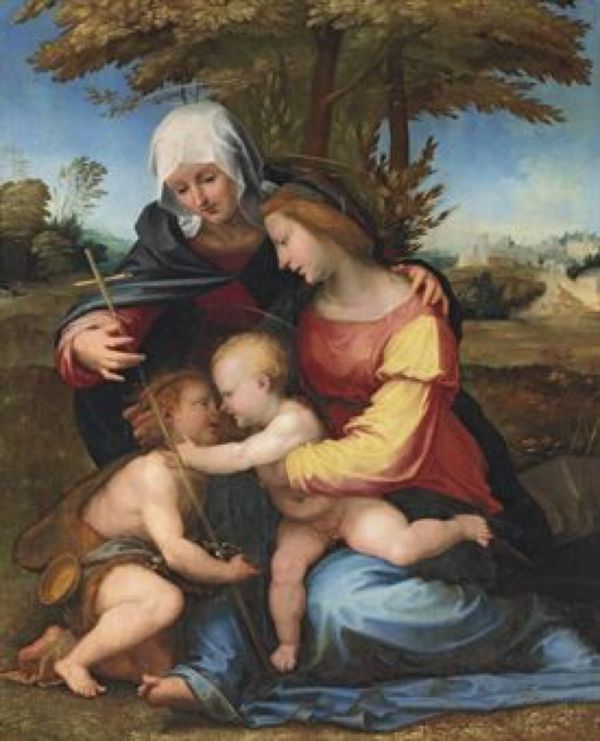
** Painting by Fra Bartolomeo
Thursday, April 8, 2010
The one true thing: that we may contemplate the joy of the Lord for ever
"Perhaps you may still ask why the apostle said,
We know not what to pray for as we ought,for it is wholly incredible that either he or those to whom he wrote were ignorant of the Lord's Prayer. He could not say this either rashly or falsely; what, then, do we suppose to be his reason for the statement? Is it not that vexations and troubles in this world are for the most part profitable either to heal the swelling of pride, or to prove and exercise patience, for which, after such probation and discipline, a greater reward is reserved, or to punish and eradicate some sins; but we, not knowing what beneficial purpose these may serve, desire to be freed from all tribulation? To this ignorance the apostle showed that even he himself was not a stranger (unless, perhaps, he did it notwithstanding his knowing what to pray for as he ought), when, lest he should be exalted above measure by the greatness of the revelations, there was given unto him a thorn in the flesh, a messenger of Satan to buffet him; for which thing, not knowing surely what he ought to pray for, he besought the Lord thrice that it might depart from him. At length he received the answer of God, declaring why that which so great a man prayed for was denied, and why it was expedient that it should not be done:
My grace is sufficient for you; my strength is made perfect in weakness.
Accordingly, we know not what to pray for as we ought in regard to tribulations, which may do us good or harm; and yet, because they are hard and painful, and against the natural feelings of our weak nature, we pray, with a desire which is common to mankind, that they may be removed from us. But we ought to exercise such submission to the will of the Lord our God, that if He does not remove those vexations, we do not suppose ourselves to be neglected by Him, but rather, in patient endurance of evil, hope to be made partakers of greater good, for so His strength is perfected in our weakness. God has sometimes in anger granted the request of impatient petitioners, as in mercy He denied it to the apostle. For we read what the Israelites asked, and in what manner they asked and obtained their request; but while their desire was granted, their impatience was severely corrected. Again, He gave them, in answer to their request, a king according to their heart, as it is written, not according to His own heart. He granted also what the devil asked, namely, that His servant, who was to be proved, might be tempted. He granted also the request of unclean spirits, when they besought Him that their legion might be sent into the great herd of swine. These things are written to prevent any one from thinking too highly of himself if he has received an answer when he was urgently asking anything which it would be more advantageous for him not to receive, or to prevent him from being cast down and despairing of the divine compassion towards himself if he be not heard, when, perchance, he is asking something by the obtaining of which he might be more grievously afflicted, or might be by the corrupting influences of prosperity wholly destroyed. In regard to such things, therefore, we know not what to pray for as we ought. Accordingly, if anything is ordered in a way contrary to our prayer, we ought, patiently bearing the disappointment, and in everything giving thanks to God, to entertain no doubt whatever that it was right that the will of God and not our will should be done. For of this the Mediator has given us an example, inasmuch as, after He had said,
Father, if it be possible, let this cup pass from me,transforming the human will which was in Him through His incarnation, He immediately added,
Nevertheless, O Father, not as I will but as You will.Wherefore, not without reason are many made righteous by the obedience of One.
But whoever desires from the Lord that
one thing,and seeks after it, asks in certainty and in confidence, and has no fear lest when obtained it be injurious to him, seeing that, without it, anything else which he may have obtained by asking in a right way is of no advantage to him. The thing referred to is the one true and only happy life, in which, immortal and incorruptible in body and spirit, we may contemplate the joy of the Lord for ever. All other things are desired, and are without impropriety prayed for, with a view to this one thing. For whosoever has it shall have all that he wishes, and cannot possibly wish to have anything along with it which would be unbecoming. For in it is the fountain of life, which we must now thirst for in prayer so long as we live in hope, not yet seeing that which we hope for, trusting under the shadow of His wings before whom are all our desires, that we may be abundantly satisfied with the fatness of His house, and made to drink of the river of His pleasures; because with Him is the fountain of life, and in His light we shall see light, when our desire shall be satisfied with good things, and when there shall be nothing beyond to be sought after with groaning, but all things shall be possessed by us with rejoicing. At the same time, because this blessing is nothing else than the
peace which passes all understanding,even when we are asking it in our prayers, we know not what to pray for as we ought. For inasmuch as we cannot present it to ourminds as it really is, we do not know it, but whatever image of it may be presented to our minds we reject, disown, and condemn; we know it is not what we are seeking, although we do not yet know enough to be able to define what we seek."
-- From a letter of St Augustine to Proba
Saturday, April 3, 2010
Holy Saturday
"They imagine wickedness, and practise it; that they keep secret among themselves, every man in the deep of his heart. And they say that no man shall see them. Now one known as Man came up against these communings, and in the form of Man he did suffer himself to be laid hold upon. For they could not have laid hold upon him, had he not been Man; neither could he have been seen, had he not been Man; nor been scourged, had he not been Man; nor been crucified, nor died, had he not been Man. As Man, therefore, he came to endure all those sufferings which could have had none effect upon him had he not been Man. And further, had he not been Man, in no wise could man have been redeemed. So it was, as the Psalmist saith, that he came, as Man, unto a deep heart; that is, something that passeth human understanding. For he shewed his Manhood to the eyes of men, but kept his Godhead hidden deep within: thus concealing the form of God, wherein he is equal to the Father; but exhibiting the form of a servant, wherein he is inferior to the Father.
How far did they encourage themselves in those diligent searchings, wherein they failed so greatly? So far that even when the Lord was dead and buried, they set a watch over the sepulchre. For they said of Christ to Pilate: That deceiver. By this name the Lord Jesus Christ was named, to the comfort of his servants, when they be called deceivers. That deceiver (say they to Pilate) said while he was yet alive, After three days I will rise again: command, therefore, that the sepulchre be made sure until the third day, lest his disciples come by night, and steal him away, and say unto the people, He is risen from the dead; so the last error shall be worse than the first. Pilate said unto them: Ye have a watch; go your way, make it as sure as ye can. So they went, and made the sepulchre sure, sealing the stone, and settling a watch.
They placed a watch of soldiers over the sepulchre. The earth quaked! The Lord rose again! Such were the miracles wrought round about the sepulchre, that the very soldiers who kept watch might have become witnesses, if they had been willing to declare the truth. But that covetousness which possessed the disciple and companion of Christ, possessed also the soldiers who guarded his tomb. We will give you money (say they), and say ye that his disciples came and stole him away while ye slept. Truly, they failed in their snare and communings. What is this thou saidst, O wretched cunning? Dost thou so far forsake the light of prudence and duty, and plunge thyself so deep in craftiness, as to speak thus: Say ye that his disciples came and stole him away while ye slept? Thou producest sleeping witnesses! Surely thou wast thyself asleep, who didst thus snare thyself in such a snare."
-- From the Treatise on the Psalms by St Augustine
How far did they encourage themselves in those diligent searchings, wherein they failed so greatly? So far that even when the Lord was dead and buried, they set a watch over the sepulchre. For they said of Christ to Pilate: That deceiver. By this name the Lord Jesus Christ was named, to the comfort of his servants, when they be called deceivers. That deceiver (say they to Pilate) said while he was yet alive, After three days I will rise again: command, therefore, that the sepulchre be made sure until the third day, lest his disciples come by night, and steal him away, and say unto the people, He is risen from the dead; so the last error shall be worse than the first. Pilate said unto them: Ye have a watch; go your way, make it as sure as ye can. So they went, and made the sepulchre sure, sealing the stone, and settling a watch.
They placed a watch of soldiers over the sepulchre. The earth quaked! The Lord rose again! Such were the miracles wrought round about the sepulchre, that the very soldiers who kept watch might have become witnesses, if they had been willing to declare the truth. But that covetousness which possessed the disciple and companion of Christ, possessed also the soldiers who guarded his tomb. We will give you money (say they), and say ye that his disciples came and stole him away while ye slept. Truly, they failed in their snare and communings. What is this thou saidst, O wretched cunning? Dost thou so far forsake the light of prudence and duty, and plunge thyself so deep in craftiness, as to speak thus: Say ye that his disciples came and stole him away while ye slept? Thou producest sleeping witnesses! Surely thou wast thyself asleep, who didst thus snare thyself in such a snare."
-- From the Treatise on the Psalms by St Augustine
Thursday, April 1, 2010
Maundy Thursday
"Hear my prayer, O God, and hide not thyself from my petition: take heed unto me, and hear me: how I mourn in my trial, and am vexed; because of the crying of the enemy, and of the tribulation which cometh from the ungodly. These are the words of one who is disquieted, beset by trouble and anxiety. He prayeth as one under much suffering, desiring deliverance from evil. Let us see from what evil he doth suffer: and as we hear what that evil is, let us recognize that we also suffer from the same thing; so that as we share his tribulation, we may also join in his prayer. I mourn in my trial (saith he) and am vexed. When doth he mourn? When is he vexed? In my trial, saith he. He hath in mind the ungodly that cause him tribulation, which same he calleth his trial. Therefore, think not that the wicked can serve no good purpose in this world, and that God is unable to accomplish good by means of them. Every wicked person is permitted to live in order that he may be made righteous, or else that the righteous may be tried by him.
I would to God that the ungodly who now try us were converted, and so were on trial with us. Yet, though they continue to try us, let us not hate them: for we know not whether any of them will continue to the end in his evil ways. And mostly, when thou thinkest thyself to be hating thine enemy, thou hatest thy brother, and knowest it not. Only the devil and his angels are shewn to us in Scripture as doomed to eternal fire: their amendment alone is hopeless, against whom we wage a hidden strife. For which strife the Apostle would arm us, saying: We wrestle not against flesh and blood (that is, not against men, whom we see) but against principálities, against powers, against the rulers of the darkness of this world. Mark that he saith not: The rulers of this world: lest perchance thou shouldst think that devils are rulers of heaven and earth; but rather, he saith: The rulers of the darkness of this world. When he speaketh thus of the world, he would have us understand the lovers of the world whereof the Gospel saith: And the world knew him not.
For I have spied unrighteousness and strife in the city. Give heed now to the glory of the Cross itself. On the brow of kings is now placed that Cross, which once enemies did deride. Effect hath proven strength. He hath subdued the world, not with a sword, but with Wood. The Wood of the Cross seemed a worthy object of scorn to his enemies; and standing before that very Wood, they wagged their heads, saying, If thou be the Son of God, come down from the Cross! Thus did he stretch forth his hands to a disobedient and gainsaying people. If he is just who doth live by faith, then is he unrighteous who hath not faith. Wherefore, when he saith: Unrighteousness: understand that it is the disobedience of unbelief. The Lord then saw unrighteousness and strife in the city, and stretched out his hands unto an unbelieving and gainsaying people. And yet, looking upon the very same, he saith: Father, forgive them, for they know not what they do."
-- From the Treatise on the Psalms by St Augustine
** Painting by Andrea Mantegna
Tuesday, January 5, 2010
God descended mercifully
"Our Lord Jesus Christ, dearest brethren, who in eternity is the Creator of all things, was as at this time born of a mother and became our Saviour. It was as at this time that he willed to be born for us in earthly time, so as to lead us to the Father's eternity. God is made man, that man may be made as God. That man may eat Angels' food, the Lord of Angels was as on this day made man.
Now is fulfilled that prophecy: Drop down, ye heavens, from above, and let the skies pour down righteousness: let the earth open, and bring forth a Saviour. He who made all things is therefore himself made, that those who are lost may be found. It is even as man is made to testify of himself in the Psalms: Before I was humbled, I went wrong. Man sinned and became guilty. God is born man, that the guilty may be delivered. Man fell, but God descended. Man fell miserably, God descended mercifully. Man fell by pride, God descended with grace.
O my brethren, what a miracle! what a wonder! The laws of nature are changed concerning man: God is born, a Virgin conceiveth without an husband; the Word of God is wedded to one who knoweth no man; she is at once Mother and Virgin. A Mother, yet ínviolate: a Virgin having a Son; knowing no man, ever sealed, yet not unfruitful. For he alone was born without sin. He alone was born without human embrace, begotten not of the will of the flesh, but of the obedience of the mind."
-- From a Sermon by St Augustine
Now is fulfilled that prophecy: Drop down, ye heavens, from above, and let the skies pour down righteousness: let the earth open, and bring forth a Saviour. He who made all things is therefore himself made, that those who are lost may be found. It is even as man is made to testify of himself in the Psalms: Before I was humbled, I went wrong. Man sinned and became guilty. God is born man, that the guilty may be delivered. Man fell, but God descended. Man fell miserably, God descended mercifully. Man fell by pride, God descended with grace.
O my brethren, what a miracle! what a wonder! The laws of nature are changed concerning man: God is born, a Virgin conceiveth without an husband; the Word of God is wedded to one who knoweth no man; she is at once Mother and Virgin. A Mother, yet ínviolate: a Virgin having a Son; knowing no man, ever sealed, yet not unfruitful. For he alone was born without sin. He alone was born without human embrace, begotten not of the will of the flesh, but of the obedience of the mind."
-- From a Sermon by St Augustine
Sunday, December 27, 2009
Feast of St John Apostle and Evangelist
Now this Word, whose flesh was so real that he could be touched by human hands, began to be flesh in the Virgin Mary's womb; but he did not begin to exist at that moment. We know this from what John says: What existed from the beginning. Notice how John's letter bears witness to his Gospel, which you just heard a moment ago: In the beginning was the Word, and the Word was with God.
Someone might interpret the phrase the Word of life to mean a word about Christ, rather than Christ's body itself which was touched by human hands. But consider what comes next: and life itself was revealed. Christ therefore is himself the Word of life.
And how was this life revealed? It existed from the beginning, but was not revealed to men, only to angels, who looked upon it and feasted upon it as their own spiritual bread. But what does Scripture say? Mankind ate the bread of angels.
Life itself was therefore revealed in the flesh. In this way what was visible to the heart alone could become visible also to the eye, and so heal men's hearts. For the Word is visible to the heart alone, while flesh is visible to bodily eyes as well. We already possessed the means to see the flesh, but we had no means of seeing the Word. The Word was made flesh so that we could see it, to heal the part of us by which we could see the Word.
John continues: And we are witnesses and we proclaim to you that eternal life which was with the Father and has been revealed among us - one might say more simply, "revealed to us."
We proclaim to you what we have heard and seen. Make sure that you grasp the meaning of these words. The disciples saw our Lord in the flesh, face to face; they heard the words he spoke, and in turn they proclaimed the message to us. So we also have heard, although we have not seen.
Are we then less favored than those who both saw and heard? If that were so, why should John add: so that you too may have fellowship with us? They saw, and we have not seen; yet we have fellowship with them, because we and they share the same faith.
And our fellowship is with God the Father and Jesus Christ his Son. And we write this to you to make your joy complete - complete in that fellowship, in that love and in that unity."
-- From the tractates on the first letter of John by St Augustine
** Painting by Juan De (Vicente) Juanes
Friday, August 28, 2009
All which is not my God is poverty to me
"The angels fell, the soul of man fell and they have thus indicated the abyss in that dark deep, ready for the whole spiritual creation, unless Thou hadst said from the beginning, 'Let there be light,' and there had been light, and every obedient intelligence of Thy celestial City had cleaved to Thee, and rested in Thy Spirit, which unchangeably is 'borne over' everything changeable. Otherwise, even the heaven of heavens itself would have been a darksome deep, whereas now it is light in the Lord. For even in that wretched restlessness of the spirits who fell away, and, when unclothed of the garments of Thy light, discovered their own darkness, dost Thou sufficiently disclose how noble Thou hast made the rational creature; to which nought which is inferior to Thee will suffice to yield a happy rest, and so not even herself. For Thou, O our God, shalt enlighten our darkness; from Thee are derived our garments of light, and then shall our darkness be as the noonday.' Give Thyself unto me, O my God, restore Thyself unto me; behold, I love Thee, and if it be too little, let me love Thee more strongly. I cannot measure my love, so that I may come to know how much there is yet wanting in me, ere my life run into Thy embracements, and not be turned away until it be hidden in the secret place of Thy Presence. This only I know, that woe is me except in Thee, -- not only without, but even also within myself; and all plenty which is not my God is poverty to me."
-- The Confessions by St Augustine
Today the Church celebrates the memorial of St Augustine. Please pray for all those sons and daughters who are living in sin, that they may have a conversion of heart like St Augustine.
-- The Confessions by St Augustine
Today the Church celebrates the memorial of St Augustine. Please pray for all those sons and daughters who are living in sin, that they may have a conversion of heart like St Augustine.
Subscribe to:
Posts (Atom)